A useful room begins with observation. Take what serves you, adapt it to your space, and leave room for the home to change.
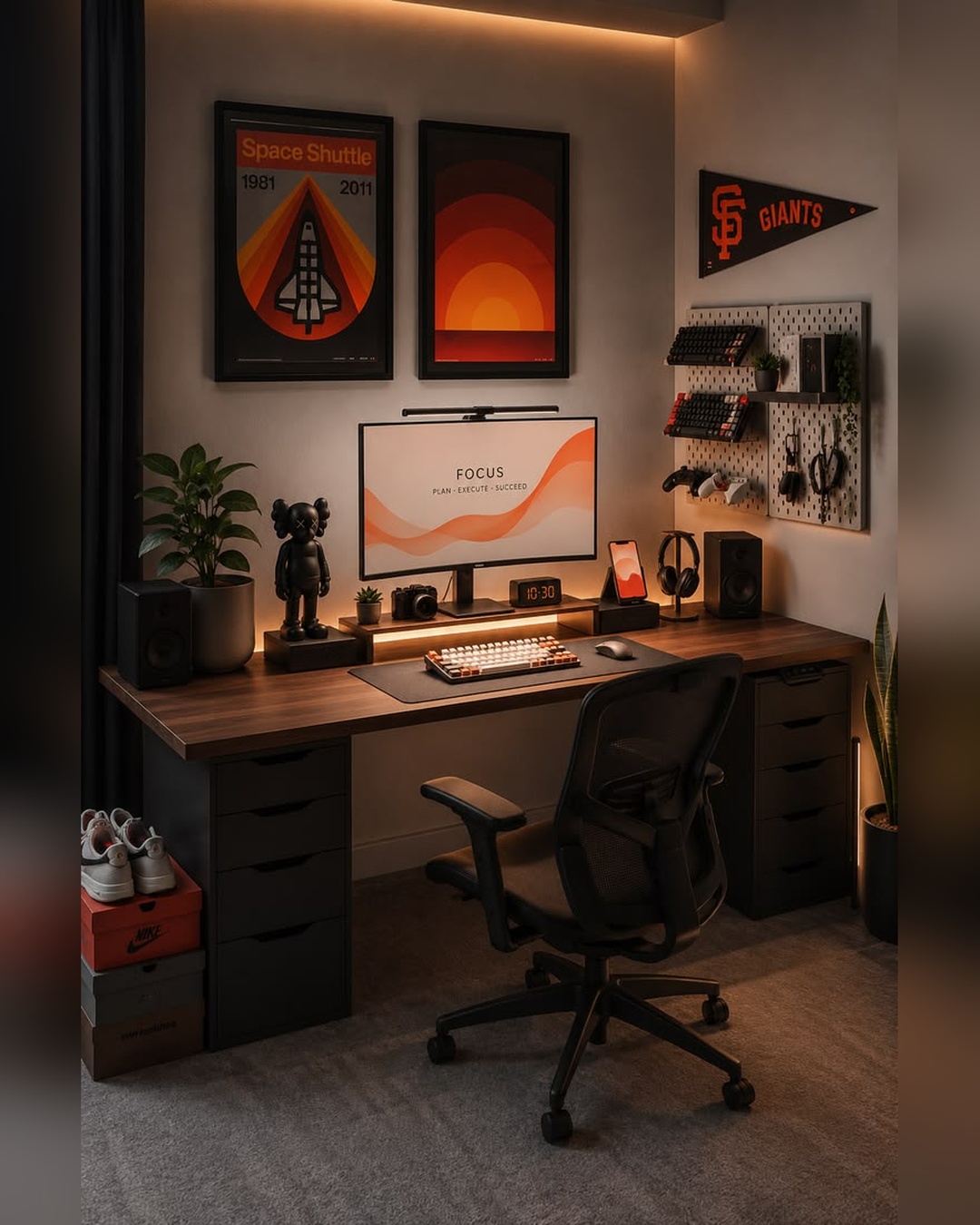
Name the interruption first
Work at your existing desk and write down what interrupts you. Perhaps the notebook has nowhere to go, a cable catches when the chair moves, or frequently used objects disappear under papers. Describe the problem without deciding which accessory to buy. Try moving an existing item before adding another object. An accessory takes space of its own, and a tidy-looking setup is not proof that it helps you work. Keep the surface area you actually use for the keyboard, mouse, and paperwork in the plan.
Match the object to a measured need
For a tray, measure the objects it will hold and check how you will lift or open it. For an equipment stand, match the device size, weight, placement, and any mounting requirements against the manufacturer’s specifications. Do not assume a stand is compatible because it looks similar to one in a photograph. For a task light, identify the surface and activity to illuminate, then compare controls, dimensions, and electrical compatibility from its documentation. A portable lamp and an adjustable-arm lamp solve different positioning problems; neither is automatically a better choice.
Keep cables and movement in view
Check the chair’s route, the equipment that moves, and how cables connect. Use the equipment instructions when organizing cables and leave the access needed for ordinary use. Do not modify wiring or electrical equipment to make an organizer fit. If an accessory attaches to the desk, review the material, thickness, and permitted mounting conditions. Ask the desk or accessory manufacturer when compatibility is uncertain. Adhesive strength or clamp fit cannot be established from a room photograph.
Buy one improvement and reassess
Compare dimensions, compatibility, materials where documented, controls, care, and return conditions. Keep a short note explaining the job the item must do. Avoid buying a coordinated bundle when only one piece addresses the problem. After introducing the item, use the desk normally and decide whether the interruption has changed. This is your own practical assessment rather than our product test. If another problem remains, define it separately before making the next purchase.
Sources & method
This is original editorial planning or inspiration, not a hands-on product test. Styling choices are editorial suggestions. Product-specific instructions and your own measurements take priority. Revision 2; human review pending. These are original styling suggestions. No model-specific product specifications or testing claims are made. Product recommendations require a separate evidence review.